
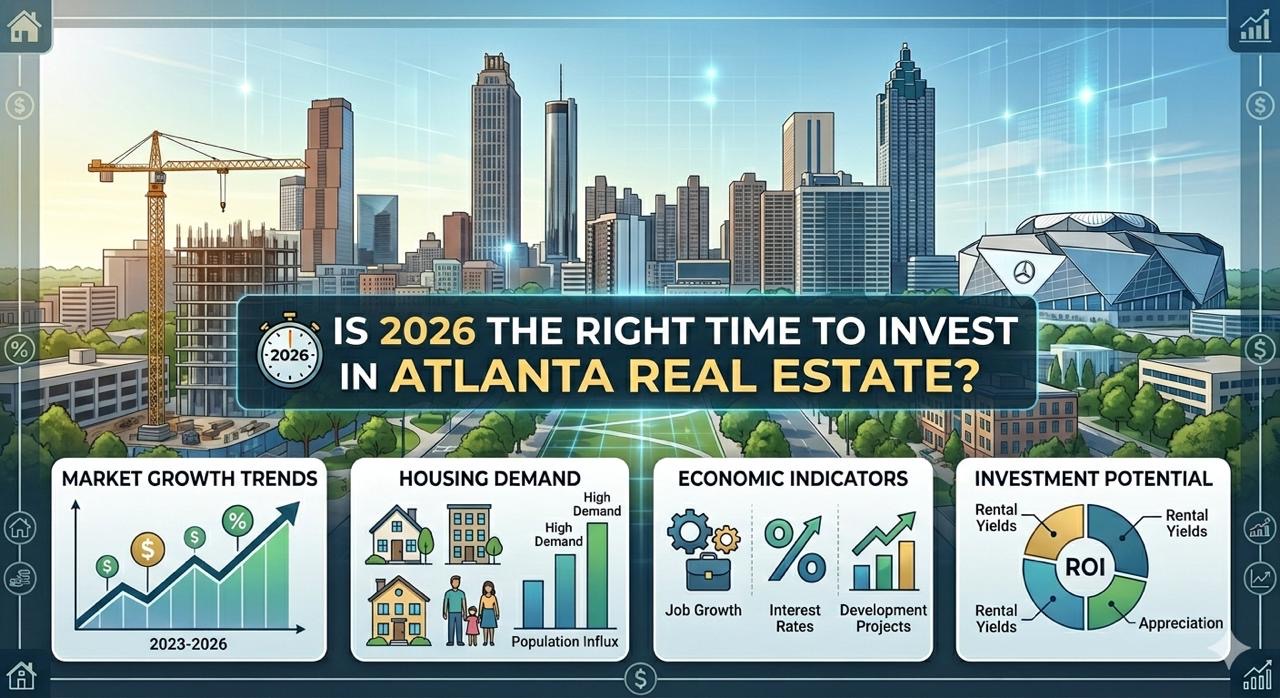
Atlanta has long been one of the most attractive real estate markets in the United States—but in 2026, many investors are asking the same question: Is now really the right time to invest?
With shifting market conditions, rising interest rates, and evolving demand, the answer isn’t a simple yes or no. Instead, it depends on understanding the current trends, risks, and opportunities shaping Atlanta’s housing market.
Atlanta Real Estate Market Snapshot (2026)
The Atlanta market in 2026 is best described as stable but transitioning.
- Median home prices: ~$392K (+3.3% YoY)
- Median listing price: ~$359K (down 2.7% YoY)
- Average rent: ~$1,888/month (+2.9% YoY)
What this means:
- Prices are growing—but slowly
- Inventory is increasing
- Buyers have more negotiating power
Experts describe 2026 as a “balanced market”, not a boom or crash
Why Atlanta Still Attracts Investors
1. Strong Population Growth & Migration
Atlanta continues to see strong inbound migration, especially from high-cost cities. This steady population growth fuels consistent rental demand.
2. Rising Rental Demand
Despite national fluctuations, Atlanta rents are still increasing due to limited supply and high demand.
- Rent growth: ~6–9% in some areas
This creates strong cash flow opportunities for rental property investors.
3. Economic Expansion & Job Opportunities
Atlanta’s economy remains one of the strongest in the Southeast, supported by:
- Corporate headquarters
- Tech growth
- Logistics and infrastructure
This ensures a steady stream of renters and buyers entering the market.
4. Long-Term Appreciation Potential
Forecasts suggest:
- Home prices could rise ~3–4% annually
Even though appreciation is slower than during the pandemic boom, it is more sustainable and less risky.
Challenges Investors Should Consider
1. Higher Interest Rates
Mortgage rates in 2026 are expected to stay around 6%–6.5%
Impact:
- Higher borrowing costs
- Lower short-term profitability
2. Market Correction Signals
Recent data shows:
- Price declines in some areas
- Reduced sales volume
- Increased inventory
This reflects a market correction, not a crash—giving buyers more leverage.
3. Affordability Concerns
Housing affordability remains a challenge nationwide, with demand still outpacing supply.
For investors:
- Tenants may be price-sensitive
- Property selection becomes more important
Expert Insight: A “Window of Opportunity”
Many analysts agree that 2026 offers a strategic entry point for investors:
Less competition than peak years
More inventory to choose from
Negotiation opportunities
Stable long-term growth outlook
Rather than chasing rapid appreciation, 2026 is about buying smart and holding long-term.
Best Investment Strategies for 2026
Focus on Rental Properties
Strong demand and rising rents make rental properties a top choice.
Target High-Growth Neighborhoods
Areas like Midtown, Buckhead, and suburban corridors continue to perform well.
Value-Add Investments
Look for properties you can renovate to increase value and rent potential.
Partner with Experts
Working with professional Property management services in Atlanta helps:
- Reduce vacancies
- Handle tenant management
- Maximize ROI
Final Verdict: Is 2026 a Good Time to Invest?
Yes—but with the right strategy.
Atlanta in 2026 is not a “get rich quick” market. Instead, it offers:
Stable growth
Strong rental demand
Better buying conditions
Long-term appreciation potential
For smart investors, this is a prime opportunity to enter or expand in a high-demand market.
The Atlanta real estate market is evolving—but its fundamentals remain strong. Investors who adapt to current conditions, focus on long-term gains, and leverage expert property management will be best positioned for success.