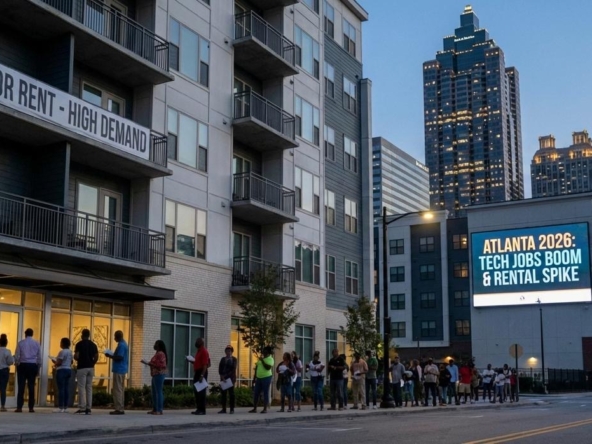

The housing market in Atlanta has entered a new phase in early 2026, with home prices showing a noticeable decline in February. After several years of rapid appreciation fueled by migration, job growth, and strong demand, the market is beginning to cool slightly. While Atlanta remains one of the most active real estate markets in the Southeast, recent data suggests a shift toward a more balanced environment for buyers and sellers.
Atlanta Housing Market Overview – February 2026
In February 2026, the median home price in Atlanta experienced a modest drop compared to late 2025 levels. Several factors have contributed to this price adjustment, including higher mortgage rates, increased housing inventory, and a slowdown in buyer competition.
Throughout 2023 and 2024, Atlanta saw significant price growth due to strong population inflows and corporate relocations. However, the beginning of 2026 indicates that the market may be stabilizing as supply gradually catches up with demand.
Key highlights of the February 2026 Atlanta housing market include:
- Slight decline in median home prices
- Increase in available housing inventory
- Longer average time on market
- Reduced bidding wars compared to previous years
For many buyers who were previously priced out of the market, these changes are creating new opportunities.
Why Home Prices Are Falling in Atlanta
Several economic and market factors are influencing the price shift in Atlanta’s real estate market.
1. Rising Mortgage Interest Rates
Mortgage rates remain relatively high compared to the historic lows seen during the pandemic years. Higher borrowing costs reduce purchasing power, which often leads to slower demand and softer home prices.
2. Growing Housing Inventory
More homeowners are listing their properties in early 2026. With increased inventory available, buyers now have more choices, which reduces the intense competition that drove prices upward in previous years.
3. Market Normalization
After several years of rapid growth, the Atlanta market is simply returning to more sustainable levels. Real estate experts often refer to this phase as market normalization, where prices stabilize after a period of aggressive increases.
4. Economic Uncertainty
Although Atlanta continues to experience strong job growth, national economic uncertainty has made some buyers more cautious. This can temporarily slow housing demand.
Opportunities for Buyers
The February 2026 market shift may benefit homebuyers who have been waiting for better conditions. Lower prices and increased inventory mean buyers have more negotiating power.
Some advantages for buyers include:
- Less competition from other buyers
- Potential price reductions from sellers
- More time to evaluate properties before making offers
- Greater chances of securing favorable contract terms
For first-time buyers or relocating families, Atlanta may now present a more accessible entry point into the housing market.
What Sellers Should Expect
Sellers in Atlanta may need to adjust their expectations compared to the peak market conditions of previous years. Pricing homes competitively and preparing properties well for listing will become increasingly important.
Successful sellers in today’s market are focusing on:
- Accurate pricing based on current market data
- Professional home staging and photography
- Strategic marketing to attract qualified buyers
- Flexibility during negotiations
Despite the recent decline in prices, well-maintained homes in desirable neighborhoods are still attracting strong interest.
Atlanta’s Long-Term Real Estate Outlook
Even with short-term price adjustments, the long-term outlook for the Atlanta housing market remains positive. The city continues to attract new residents due to its strong economy, relatively affordable housing compared to other major metropolitan areas, and expanding job opportunities.
Atlanta remains a major hub for industries such as technology, logistics, entertainment, and finance. Population growth and corporate expansion are expected to support housing demand over the coming years.
The February 2026 housing data signals a transition in the Atlanta real estate market. While home prices have dipped slightly, the shift reflects a healthier and more balanced market environment.
Buyers may find new opportunities as inventory increases and competition eases, while sellers can still achieve strong results by pricing homes strategically and preparing them for today’s evolving market conditions.
As Atlanta continues to grow economically and attract new residents, its real estate market remains one of the most dynamic and resilient in the United States.