In recent years, institutional investors have become major players in the single-family rental (SFR) market. Companies like Invitation Homes and American Homes 4 Rent have acquired thousands of homes nationwide, including fast-growing metros like Atlanta. As housing affordability concerns rise, some policymakers are proposing restrictions or outright bans on institutional buyers purchasing single-family homes.
At first glance, banning large investors may seem like a simple solution to help first-time homebuyers. However, the ripple effects of such a policy could be far more complex.
Why Are Institutional Buyers Being Targeted?
Institutional investors typically purchase single-family homes to operate them as long-term rentals. Critics argue that:
- Large firms can outbid individual buyers with cash offers
- Bulk purchases reduce housing inventory
- Rental rate increases may follow concentrated ownership
In competitive markets, especially in high-growth cities, these concerns have fueled debates about fairness and accessibility in housing.
Potential Benefits of a Ban
1. Increased Opportunities for First-Time Buyers
Limiting institutional competition could create more opportunities for local families to purchase homes, especially entry-level properties.
2. Reduced Cash Offer Pressure
Without corporate cash buyers, bidding wars may become less aggressive, potentially stabilizing home prices in certain neighborhoods.
3. More Owner-Occupied Communities
Higher homeownership rates can strengthen neighborhood stability and community engagement.
The Hidden Ripple Effects
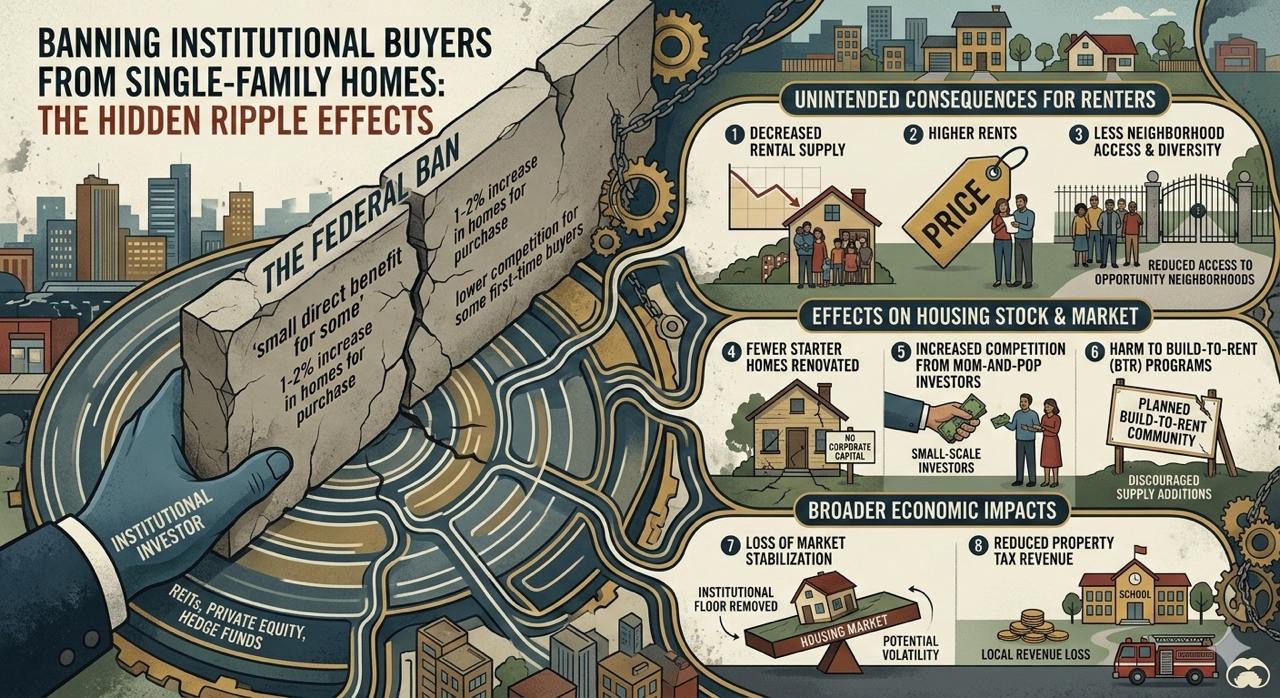
While the goals may be well-intentioned, banning institutional buyers could trigger unintended consequences.
1. Shrinking Rental Supply
Institutional investors supply professionally managed rental homes. Removing them from the market could:
- Reduce rental inventory
- Increase rents due to lower supply
- Limit options for families who prefer renting
In cities like Atlanta, where population growth remains strong, demand for single-family rentals continues to rise. A supply shock could tighten the rental market significantly.
2. Impact on Property Management & Local Economies
Large institutional portfolios generate consistent business for:
- Property management companies
- Maintenance vendors
- Contractors
- Local service providers
If institutional ownership declines, smaller landlords may not maintain homes at the same operational scale, potentially reducing economic activity tied to rental housing.
3. Market Volatility
Institutional investors often hold properties long-term and use data-driven strategies. Sudden regulatory shifts could:
- Slow housing development pipelines
- Reduce investor confidence
- Impact construction financing
This uncertainty may discourage new housing construction, which is a key solution to affordability issues.
4. Shift Toward Smaller LLC Investors
A ban targeting large firms could simply shift purchases to smaller LLCs or private investment groups. Instead of eliminating investor activity, it may fragment ownership without meaningfully improving affordability.
What About Affordability?
Housing affordability is primarily driven by supply and demand. According to national housing trends, inventory shortages and population growth are stronger drivers of price increases than investor activity alone.
Without policies that increase new construction, zoning flexibility, and infrastructure expansion, banning institutional buyers may not significantly reduce prices.
The Atlanta Example
Markets like Atlanta illustrate the complexity of the issue:
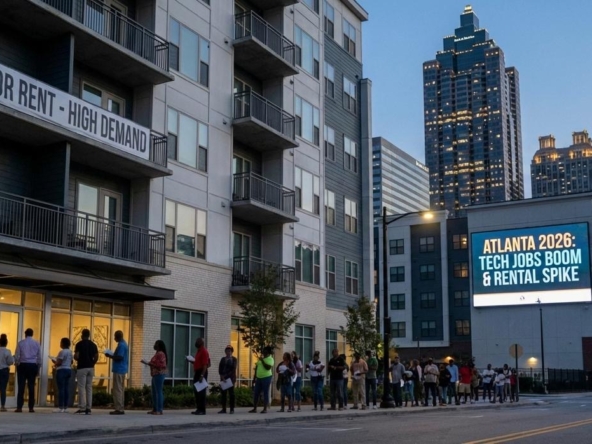
- Rapid job growth
- Population inflows
- Strong rental demand
- Limited affordable housing supply
Institutional buyers entered these markets partly because of strong fundamentals. Removing them does not remove demand—it may simply redistribute it.
For property owners and landlords, the question becomes: will reduced institutional competition create opportunity, or will tighter rental supply increase operational challenges?
A Balanced Approach
Instead of outright bans, policymakers could consider:
- Ownership caps by zip code
- First-look programs for owner-occupants
- Incentives for new housing development
- Transparency requirements for bulk purchases
These measures may address affordability concerns without destabilizing the rental ecosystem.
Banning institutional buyers from single-family homes is a policy proposal with wide-ranging implications. While it may create short-term opportunities for some buyers, the long-term effects on rental supply, affordability, and market stability are less certain.
For investors, landlords, and property managers, staying informed about regulatory trends is essential. Housing markets are interconnected systems—changes in one area often create ripple effects across the entire ecosystem.
If you’re a property owner navigating shifting market dynamics, understanding both the risks and opportunities will be key to making strategic, informed decisions in 2026 and beyond.